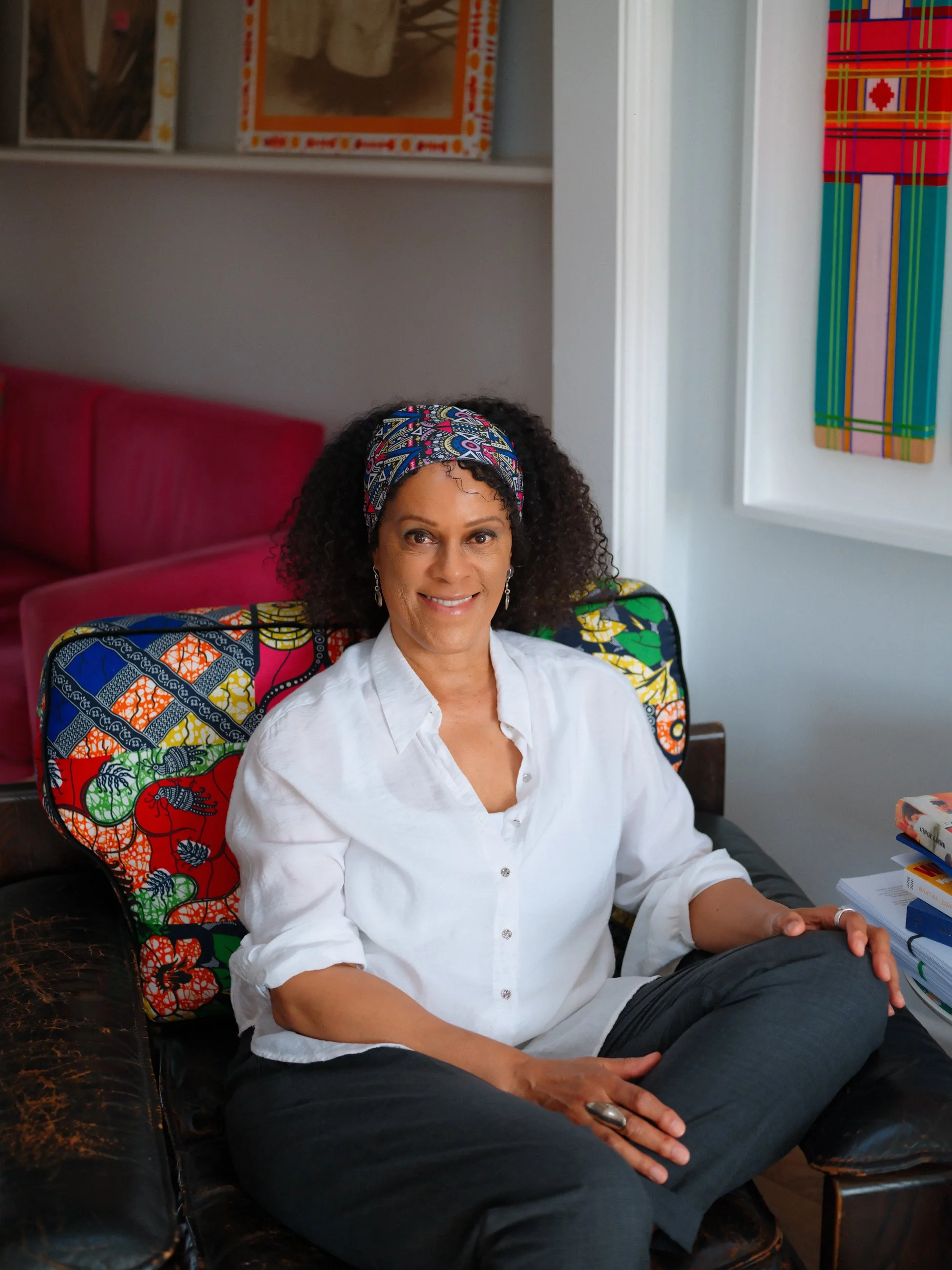
Bernardine Evaristo
My first experience of the Royal Court was in 1982, at around the time I graduated from Rose Bruford College of Speech and Drama (as it was then called) where I'd studied Community Theatre Arts. The course involved not only acting training but also writing into the gaps in theatre, which for the five black women on the course was a godsend. The gap for us was actually a chasm because other than token gestures, black women's stories were almost invisible on the British stage, and this became an urgent motivation to write them. If it wasn't for this course, I would never have become a writer, or founded Theatre of Black Women (1982-88) with Paulette Randall and Patricia St. Hilaire.
So there I was, at twenty-two, about to enter the professional world, when the invitation came to write something for the Royal Court's Young Writers scheme as part of the Women Live Festival designed to promote women in the arts, organised by the Women in Entertainment organisation (1982-1988). The invitation came via David Sulkin, who had long been committed to creating opportunities for outsider voices, and was both Director of the Court's Young People's Theatre and a teacher at Rose Bruford, where he taught us. It's a reminder that change happens because of the actions of individuals and groups who actively seek to correct imbalances with advocacy and projects
Seven young black women were chosen to have their short scripts staged: myself, Paulette and Patricia, Alma Christopher, Carol Williams, Yazmine Judd and the youngest at 14, Dawn Scott. My play was a poetic monologue called Moving Through, which hasn't seen the light of day since, although I have the original copy in storage. I couldn't write a conventional play to save my life; I still can't. Moving Through is a passionate, energetic, sarky, fragmented take on a young black women interrogating her childhood and navigating a racist and misogynistic London. It's very much a 'coming of rage' exploration, drawing on my own life but not entirely autobiographical. It was given a one-off performance by a young ensemble of actors as a choral piece. I remember that they stood in a line, perhaps in the studio space upstairs, it might have been the afternoon, and I was excited to hear my drama read by others. I don't think it was well-received, and if I expected the world to fall at my feet, it certainly did not. Although I now understand that this is how you build resilience and resistance, at the time I remember feeling disappointed.
I have returned to see plays at the Court many times over the years. Memorable productions include two exceptional one-woman plays by black women: random by debbie tucker green, starring Nadine Marshall in 2008 and Notes from the Field, written and performed by Anna Deavere Smith in 2018.
The Royal Court has nurtured many creatives since it began, and in the summer of 1982, I was very lucky to have the opportunity to showcase my writing in such a prestigious venue, and although I didn't realise it then, it was my first professional gig as a writer.
Bernardine Evaristo won the Booker Prize 2019 with het novel, Girl, Woman, Other, and the one-off Women's Prize Outstanding Contribution Award in 2025. The BBC adaptation of her novel, Mr Loverman, won two BAFTAs in 2025. Fore more, read her memoir, Manifesto: On Never Giving Up (Penguin 2021). www.bevaristo.com